Gameplay Focus

How Grass Cutter: Blade Runner 3D Actually Plays

This page dives into the moment-to-moment experience of steering your mower across wild grass, lining up satisfying stripes, and deciding whether the game’s relaxed cutting rhythm fits your play style.

Independent review – not the official game site

All impressions here are based on hands-on play and observation. For the official store page, use the Google Play link below.

Get it on Google Play

No accounts, APKs, or third-party mirrors – just the official Google Play listing.

The Core Cutting Loop

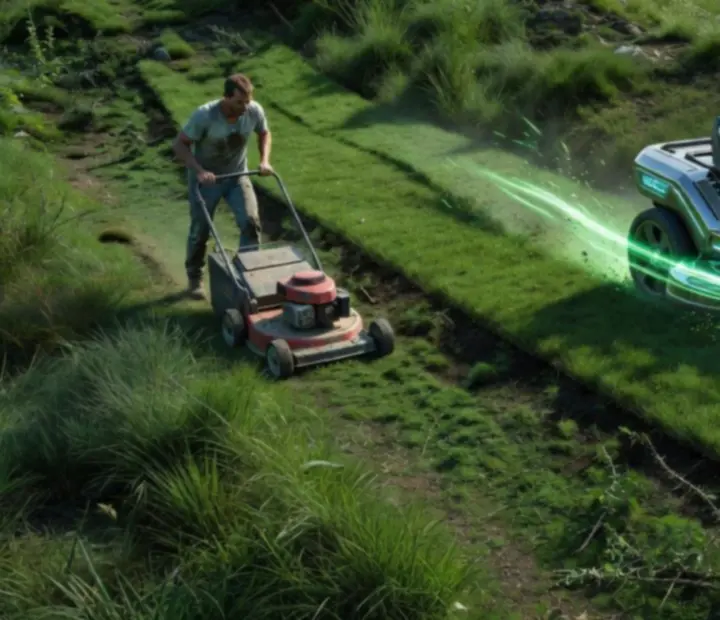
Grass Cutter: Blade Runner 3D is built around a very simple idea: guide a lawn-cutting machine across unruly grass and carve clean, ordered space out of chaos. You spend most of your time steering the mower into tall blades, watching them collapse into neat, evenly trimmed turf behind you.

Moment-to-moment play revolves around plotting your route. Each field starts as a block of overgrowth. Your task is to weave through it efficiently, avoiding missed patches while also staying clear of hazards and dead ends. The best runs feel almost like drawing with a highlighter – you trace smooth paths, double back to tidy edges, and gradually transform the whole area.

The loop remains approachable and low-pressure. You are not juggling complex systems or frantic multitasking; the satisfaction comes from flow: choose a direction, glide through knee-high grass, leave crisp stripes, then pivot into the next stretch. It is easy to slip into a relaxed rhythm where your attention is on shaping the field rather than chasing numbers or scores.

Because the game keeps returning to this core action, your enjoyment will largely depend on whether you find the act of “cleaning up” spaces inherently pleasing. If the idea of taking something messy and turning it into a tidy pattern clicks with you, the basic cutting loop is a strong, reliable hook.
Route planning over reflexes
From overgrown to orderly in seconds
Relaxed, repeatable mowing rhythm
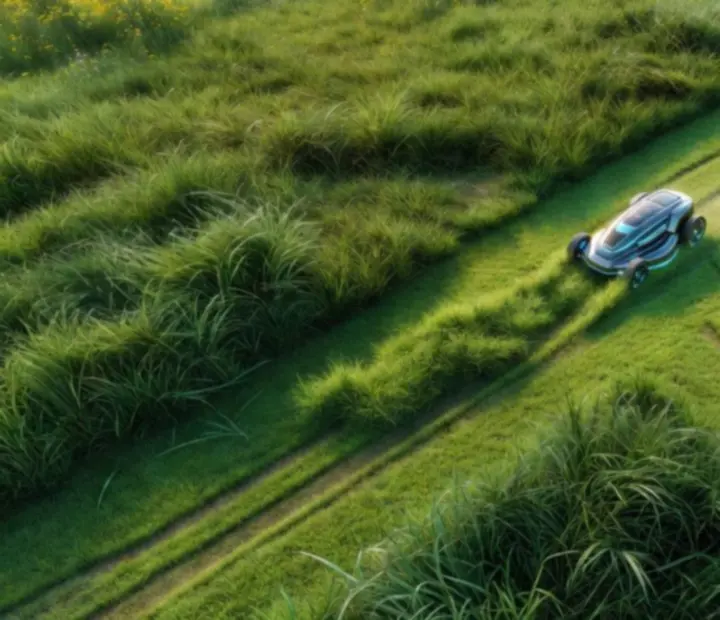
Gameplay keeps looping around one core pleasure: carving smooth mowing lines through densely packed grass.
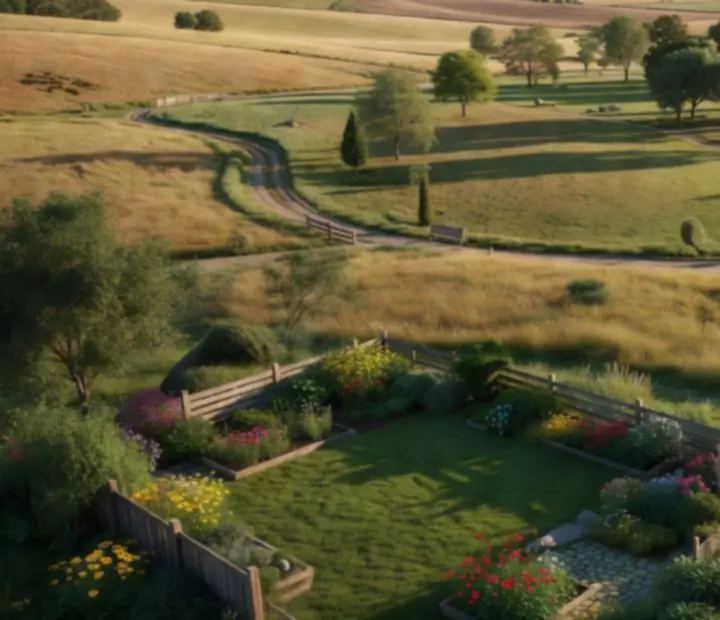
Sequence of garden, park, and countryside-style fields showcasing layout variety
Progression moves you from compact lawns to broader outdoor spaces with more elaborate mowing paths.

Field Progression and Location Variety

As you advance, Grass Cutter: Blade Runner 3D shifts you through a range of outdoor spaces. Early stages lean on compact garden-style lawns that are quick to read and easy to clear. These smaller plots help you understand how turns, corners, and narrow channels affect your mowing routes.

Later on, the game opens into parks, farms, and larger countryside-inspired fields. Layouts become more spread out, with broader sweeps of grass, longer edges, and more opportunities to draw wide, elegant curves with your mower. The visual style stays colourful and casual, but the shape of each arena keeps your routes from feeling copy-pasted.

This progression does not radically change the core mechanics, but the way grass is arranged and segmented matters. Tight garden grids favour precise, almost puzzle-like paths, while bigger maps encourage flowing, almost meditative loops around trees, fences, or natural obstacles.

If you enjoy steadily expanding your mowing canvas from backyard-sized plots to broad outdoor lanes, this gradual field escalation is one of the game’s more satisfying structural touches.

Gardens Parks Farms & fields Layout variety

Mowing Challenges and Task Goals

Every level in Grass Cutter: Blade Runner 3D gives you a clear mowing objective. You are usually working toward a specific quota: trim a given percentage of the field, clean up all visible grass, or complete your task within a certain constraint. These goals frame each field as a short, focused challenge rather than a sandbox.

Typical tasks might ask you to clear everything within a loose time limit, avoid certain obstacles scattered around the area, or simply maintain efficient coverage so you are not wasting movement. None of this turns the game into a hardcore challenge, but it does nudge you away from aimless wandering.

As new mechanics and level objectives are introduced, you are pushed to refine the way you route your runs. You start thinking about lining up longer straight segments, avoiding awkward backtracking, and timing your turns so you do not leave isolated tufts of grass behind.

This light layer of structure keeps play sessions engaging. You always have a concrete “finish line” in mind, even as the core appeal still comes from watching the grass fall away in crisp stripes.

  • Clear-cut mowing quotas make each level feel self-contained.
  • Soft time or efficiency pressures reward smoother routes.
  • Gradually introduced twists prevent early levels from blending together.
Lawn-cutting equipment slicing through a field, leaving wide trimmed paths behind
Challenges are built around how well you apply your tools to the current field layout.
Selection of lawn-cutting equipment showing stronger and wider mowing options
Stronger tools and wider cutting options help fields fall more quickly, changing the feel of each run.

Equipment and Upgrades in Action

Over time, Grass Cutter: Blade Runner 3D lets you bring more capable cutting tools into the field. These upgraded options are not about flashy gimmicks; they mainly exist to make mowing smoother, faster, and more satisfying to watch.

More powerful equipment helps you chew through dense grass that would feel sluggish with a basic setup. Wider cutting arcs mean you cover more ground in a single pass, which naturally changes how you draw paths. Instead of tight, cautious lines, you can sweep across wider lanes and carve bold shapes into the field.

This creates a loose sense of progression: early runs are about making the most of a modest mower, while later sessions lean into the pleasure of watching a field disappear under more capable hardware. The upgrade layer never feels overcomplicated, but it is enough to keep the core loop from feeling entirely static.

Efficiency Boosts

Improved tools mean fewer passes to hit your mowing quota, which shortens downtime and keeps the “cut and clear” momentum strong.

Wider Sweeps

Expanded cutting widths make curved, ribbon-like routes more viable, reinforcing the game’s focus on visual flow.

Layout Synergy

Different field shapes subtly favour certain equipment strengths, nudging you to think about which tools feel best in each environment.

For a deeper breakdown of how upgrades fit into the broader experience, you can continue on the Upgrades page after finishing this gameplay overview.

Controls and Responsiveness

Controls in Grass Cutter: Blade Runner 3D are built to be instantly readable on a touchscreen. Movement typically relies on simple drag or swipe gestures, keeping your focus on the field rather than on managing complex inputs or button layouts.

The mower reacts quickly to your direction changes, which is important for staying in that comfortable “flow state.” When control response feels tight, it is much easier to trace precise paths around corners, skim past obstacles, and correct small mistakes before they leave messy patches behind.

Because the game does not hinge on extreme precision, the control scheme can stay forgiving without ever feeling loose. You are more likely to blame a sloppy line on your route choice than on unresponsive handling, which is exactly what you want in a casual, path-drawing style experience.

Overall, the controls support the game’s soothing character. You can play one-handed, zone in on the grass in front of you, and let your fingers guide the next curve rather than wrestle with strict timing windows.

If you prefer to read about input options and ergonomics in more depth, you can head to the dedicated Controls page after this overview.

The contrast between wild grass and tidy stripes is a big part of what makes each cut feel satisfying.

Satisfying Visual Feedback

One of the strongest aspects of Grass Cutter: Blade Runner 3D’s gameplay is the visual response to every move you make. The difference between untouched grass and freshly mowed stripes is immediate and dramatic, turning even small turns into visible progress.

As your mower passes over tall grass, it collapses into neat, colour-consistent lanes that stand out clearly against the untouched areas. This “before and after” contrast encourages you to keep filling in gaps, because each new pass makes the field look cleaner and more organised.

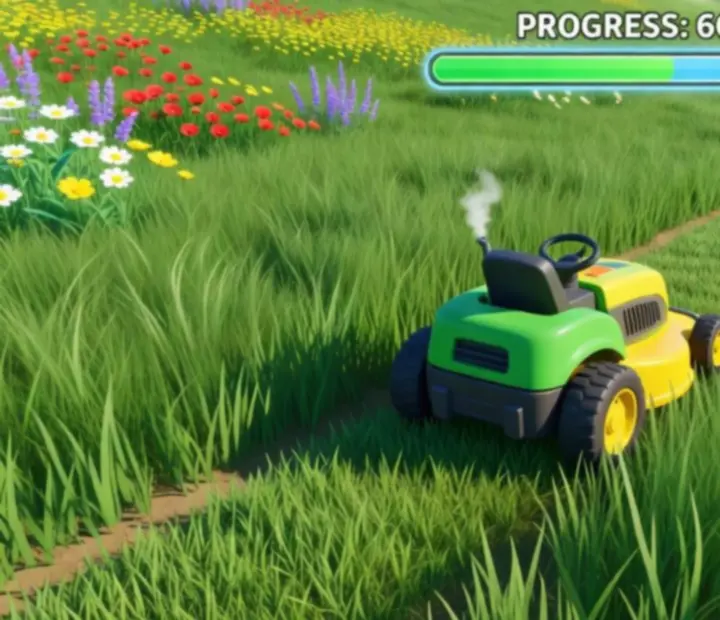
On top of the grass itself, small cues like progress markers or completion bars help track how close you are to clearing the area. These indicators give just enough structure to make each level feel like a project with an end point, without overwhelming the laid-back tone.

If you are drawn to games that scratch that visual tidy-up itch – whether it is pressure-washing, vacuuming, or painting – this mowing presentation hits a similar nerve. The feedback is not subtle; it is designed to make every stripe feel like a tiny win.

Gameplay Pacing and Challenge Balance

The pacing in Grass Cutter: Blade Runner 3D is intentionally relaxed. Most levels can be completed in short sessions, and even as difficulty edges up, the game rarely feels punishing. Mistakes are usually learning moments about better routes rather than harsh failures.

Difficulty ramps up through more intricate layouts, denser patches of grass, and more involved objectives rather than sudden spikes. Because the mechanical demands stay modest, you have room to experiment with different paths and play styles without constant pressure.

This makes the game compelling both for brief breaks and for longer “just one more field” stretches. You can log in, clear a couple of lawns, and step away without losing your bearings – or sink a longer session into easing your way through a string of varied maps.

Players looking for severe, skill-driven challenge will likely find the difficulty curve too gentle, but for most casual and mid-core players the balance feels fitting for a colourful, tactile mowing experience.

Short, self-contained levels
Gradual complexity
Low frustration, high comfort
Series of completed lawns showing different mowing patterns and tidy results
Bite-sized challenges and shifting fields make it easy to dip back in for another round of mowing.

Replay Value and Casual Appeal

Grass Cutter: Blade Runner 3D leans heavily on its core loop, and that brings both strengths and limitations. On the positive side, the combination of short levels, upgrade-driven efficiency gains, and consistently pleasant visuals makes it a natural pick for quick, repeatable sessions.

Frequent shifts in environment and layout help delay the sense of repetition. Moving between gardens, park-like areas, and broader open fields keeps your route-planning brain engaged, while your hands fall into familiar, low-effort gestures on the screen.

At the same time, the experience is intentionally narrow. If you expect major mechanical twists or deep strategic layers to emerge over time, you may eventually feel that you have “seen” most of what the game wants to offer, just in different configurations.

Where it really shines is as a casual, comfort-focused game: something you open when you want to zone out for a few minutes, tidy a couple of virtual lawns, and enjoy the transformation from messy to ordered space. Within that lane, the replay value is solid.

Best suited for players who...

  • Enjoy chill, visually satisfying “clean-up” games.
  • Like short sessions they can dip in and out of.
  • Prioritise relaxing feedback over intense challenge.
Get it on Google Play

From Overgrown to Immaculate – Is This Loop for You?

If calmly steering a mower across colourful 3D lawns, watching wild grass fall into clean patterns, and chasing light mowing challenges sounds appealing, Grass Cutter: Blade Runner 3D is likely to land well with you.

Bladegrove is an independent review site and not affiliated with the developer or publisher. For the official listing and download options, always use the Google Play link below.