Bladegrove · Independent Review

Upgrades in Grass Cutter: Blade Runner 3D

Grass Cutter: Blade Runner 3D gives players clear, straightforward ways to make mowing feel faster, smoother, and more rewarding over time. This page focuses on how its upgrade systems support that satisfying cutting flow without turning the game into a grind.

Upgrade Systems Mower Progression Casual-Friendly
Get it on Google Play Back to Full Review

Bladegrove is an independent review site and not the official game or developer.

Upgrade Mechanics: Turning each pass into smoother mowing

Upgrades in Grass Cutter: Blade Runner 3D are designed to be understandable at a glance. Rather than burying players in complicated trees or hidden statistics, the game focuses on simple, readable improvements that make your next run feel immediately better.

Across play sessions, you unlock clear ways to enhance mowing performance. These changes gently reshape how each pass over the grass feels: cutting becomes more efficient, messy areas disappear more quickly, and the core loop of moving, lining up a path, and watching grass disappear gains extra momentum.

The structure encourages you to think in terms of comfort and smoothness rather than raw power. Instead of obsessing over min-maxed builds, you simply nudge your mower toward feeling better to control, stronger against thicker grass, and more capable of handling the larger spaces that appear later in the game.

Because the systems are straightforward, players who normally avoid upgrade-heavy games can still engage. Each option is framed around familiar ideas—cutting performance, speed, reach—so you can focus on the relaxing act of mowing without constantly checking numbers.

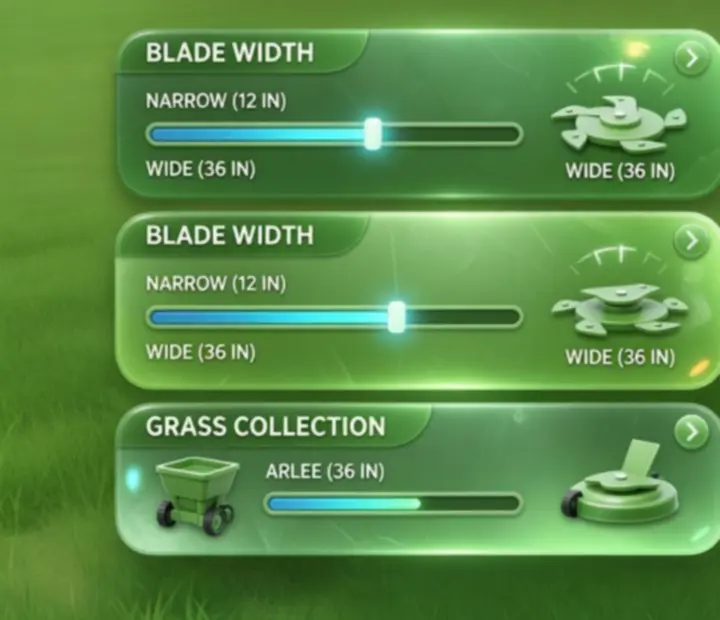
Close-up view of the upgrade menu in Grass Cutter: Blade Runner 3D highlighting mower improvements
A focused, readable upgrade screen keeps choices approachable between mowing runs.

Cutting Equipment Improvements: Wider, cleaner, more efficient

The most noticeable upgrades in Grass Cutter: Blade Runner 3D revolve around your cutting equipment. When you strengthen the mower, you feel the difference quickly: wider passes carve clearer lanes through overgrown grass, and enhanced effectiveness makes thick patches fall away more readily.

These improvements do not try to reinvent the core loop. Instead, they reinforce what the game already does well—short, satisfying bursts of mowing where each line you draw through the field visibly transforms the scene. Stronger equipment turns tedious cleanup into gratifying sweeps that leave behind neat, striped lanes.

Because the upgrades focus on real, felt performance changes, they pair naturally with the game’s casual structure. Sessions remain short and approachable, but with upgraded blades and more capable gear, each run feels a little more productive than the last.
Visual Upgrade Showcase: Feeling the difference on-screen

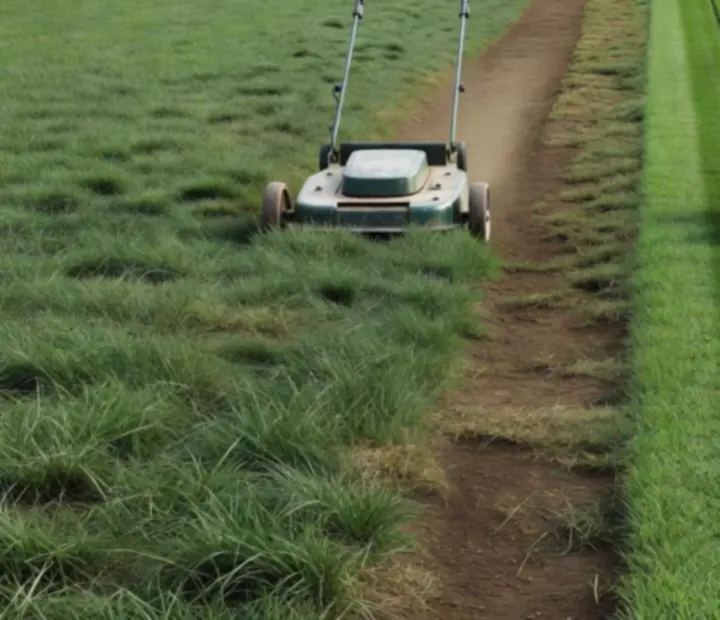
Upgrades in Grass Cutter: Blade Runner 3D are not just abstract number bumps. As your mower improves, the game reflects those changes visually, so the cutting process looks and feels more substantial. The machine’s appearance, cutting trails, and the way grass clears away all gain extra visual punch.

These cues strengthen the game’s satisfying tone. When you invest in your equipment, you see cleaner edges where grass meets cut paths, brighter mowing effects, and a more assertive presence as your mower glides through each area. This helps each enhancement feel like a visible step forward rather than an invisible stat change.

Progression Through Upgrades: Keeping larger fields under control

As the game introduces bigger, more demanding spaces, upgrades quietly become the backbone of your progress. Without needing to grind obsessively, you can strengthen your mower enough to keep the pace brisk, turning what might have felt like slow cleanup into manageable, rhythmically satisfying runs.

Previously awkward corners and larger clusters of overgrowth become easier to tame once your equipment has been improved. This creates a clear sense of progression: you recognize areas that once required multiple passes, then enjoy gliding through them in a single clean sweep after your latest upgrade.

In practice, this means upgrades act as pacing tools. They help the game stay relaxed and approachable while still making later layouts feel worth revisiting as your mower grows more capable.

Strategic Choices: Subtle agency in how you clear the field

Although Grass Cutter: Blade Runner 3D keeps its upgrade system accessible, you still make small but meaningful decisions about how your mower grows.

Choosing your first focus

Within the upgrade options, you may prioritize improvements tied to cutting power, speed, or other performance-related aspects. Opting for stronger cutting can help you push through dense patches more comfortably, while favoring pace can make your sweeping paths feel breezier and more agile.

These choices do not lock you into strict builds, but they do influence the flow of each session. Players who enjoy carefully plotting neat, deliberate lines may lean toward reliable control and consistent cutting performance. Those who prefer darting through levels may appreciate upgrades that make traversal feel snappier.

Gentle replay texture

Because you can approach upgrades in slightly different orders, repeat playthroughs can feel distinct despite sharing the same core mowing loop. One run might emphasize fast coverage across open fields, while another prioritizes comfort when dealing with thicker growth or tighter layouts.

This light layer of agency suits the game’s casual nature. You are never overloaded with hard choices, but you still feel that your decisions around which improvements to pursue first have a small, personal impact on how you clear each map.

Upgrade Interface & Accessibility: Easy to reach, easy to read

The upgrade system is tied to a clear, dedicated screen that appears between levels. This placement makes it simple to understand when you can upgrade and gives you a natural pause to decide how you want to improve your mower before diving back into the grass.

The layout favors clarity: options are grouped logically, labels are straightforward, and you can see how each enhancement relates to the cutting experience. There is little risk of getting lost in nested menus, which is ideal for players who just want to relax, choose an upgrade, and keep mowing.

This approach also supports accessibility. Because the information is confined to a focused screen with familiar visual patterns, new or casual players can take their time, read through options, and make changes without pressure. The result is an upgrade flow that feels like a natural part of the break between mowing runs rather than an interruption.

Upgrade while you catch your breath between finished fields
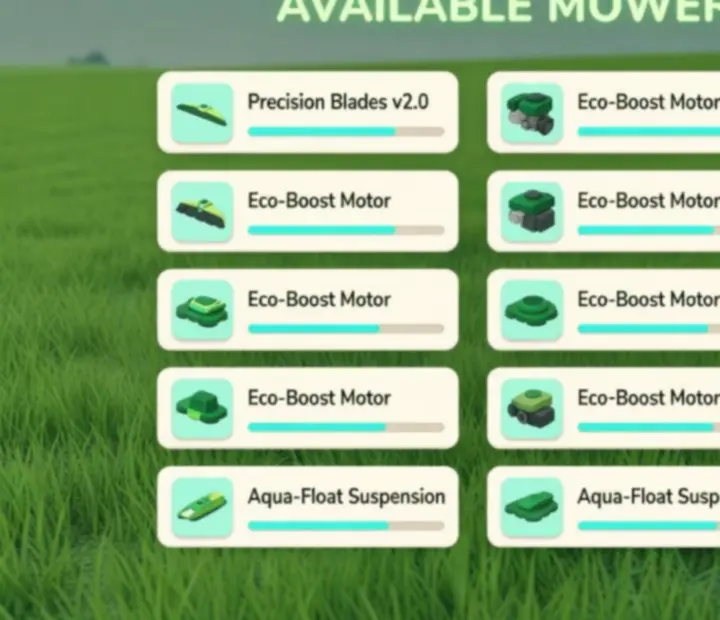
Modern upgrade interface in Grass Cutter: Blade Runner 3D showing accessible options between levels
The upgrade screen sits neatly between levels, keeping decisions calm and unhurried.

Reward Feedback: Making every upgrade feel like an achievement

Grass Cutter: Blade Runner 3D reinforces upgrades with layered feedback. When you improve your equipment, the game responds immediately, using audio and visual cues to underline your progress. Mowing trails look brighter, cutting effects feel sharper, and the overall flow of clearing a field gains extra snap.

These touches turn otherwise routine improvements into small moments of celebration. There is a clear before-and-after contrast: the same lawn that once took effort now falls away under a more confident machine, accompanied by clearer sound and more expressive cutting paths.

Because this feedback is tightly linked to play, you are constantly reminded why upgrades matter. Instead of just watching a bar fill in a menu, you experience the payoff during every pass across the grass.

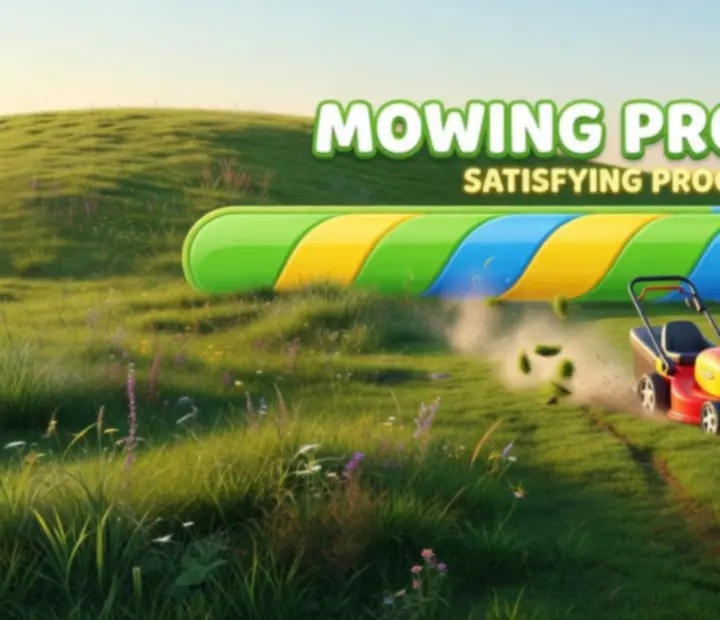
Visual lawn progress bar showing mowing completion and upgrade impact on clearing speed
Progress visuals and cutting effects highlight how much faster upgraded runs clear the lawn.

Upgrades and Long-Term Motivation: Reasons to keep mowing

Because Grass Cutter: Blade Runner 3D revolves around repeating a simple, calming loop, long-term engagement depends heavily on how fresh that loop can stay. Upgrades help support this by creating tangible goals: players return not just to clear another lawn, but to see what a slightly stronger, sharper mower can do.

Visible and functional improvements give each session a purpose beyond the immediate level. Even when layouts lean on familiar ideas—gardens, parks, farms, and open fields—the upgraded equipment changes how quickly and cleanly you can bring order to each space, which helps soften the natural repetition of mowing.

For casual players especially, this is a strong fit. The game remains approachable for short sessions, but the promise of the next incremental upgrade adds a gentle thread of progression that encourages you to return, experiment with new improvements, and enjoy the evolving feel of your machine.

Where upgrades fit in the full experience

  • Gameplay – how upgrades interact with the core mowing loop.
  • Locations – why stronger equipment matters in larger gardens and fields.
  • Verdict – how progression systems influence the overall recommendation.

Upgrade FAQs for Grass Cutter: Blade Runner 3D

Below are independent, general answers based on how the game presents its upgrades. They are intended to help you set expectations before you commit to a particular improvement path.

What can be upgraded in Grass Cutter: Blade Runner 3D?

Within the game’s upgrade screen, the focus is on your mowing equipment. Upgrades concentrate on factors that influence how effectively you clear grass, such as the feel of cutting width and overall mowing performance. Rather than managing a complex roster of characters or separate tools, you primarily invest in making your main cutting setup more capable from run to run.

Do upgrades change how the mower looks or only how it performs?

Upgrades influence both the feel and the presentation of mowing. Performance-oriented improvements aim to make passes more efficient, while visual touches—such as bolder mowing effects and clearer cutting feedback—help you see that your machine has been enhanced. The result is a sense that your mower is evolving in personality as well as in strength.

Are upgrades required to finish levels?

The design emphasizes accessibility, so upgrades are presented as helpful tools rather than strict requirements. They make it easier to keep the pace comfortable as levels introduce larger or more demanding layouts, but the core challenge still revolves around how you navigate and plan your mowing paths. In other words, upgrades smooth out the experience instead of acting as hard gates.

How do upgrades affect session length and enjoyment?

As your equipment improves, individual runs generally feel more efficient. You clear space more decisively and can spend more time enjoying the visual transformation of each field rather than wrestling with stubborn patches. This can shorten certain tasks while keeping the game’s relaxed tone intact, which is helpful for players who enjoy quick sessions but still want a sense of progress.

Does the upgrade system make the game feel grindy over time?

Based on how upgrades are framed, their purpose is to complement the existing mowing loop rather than dominate it. You are encouraged to improve your mower gradually while still treating each level as a self-contained, relaxing challenge. Players highly sensitive to repetition may still notice the inherent cycle of cutting similar spaces, but upgrades help by ensuring that familiar layouts play more briskly as your machine develops.

Ready to see how upgrades change the cut?

Grass Cutter: Blade Runner 3D keeps its upgrade systems focused on comfort, clarity, and visual payoff. If you enjoy turning overgrown spaces into clean, striped lawns and want light progression layered on top, it may fit neatly into your casual rotation.

Get it on Google Play Read our final recommendation

External store links go only to the official Google Play listing. Bladegrove does not provide downloads, accounts, or APK files.